
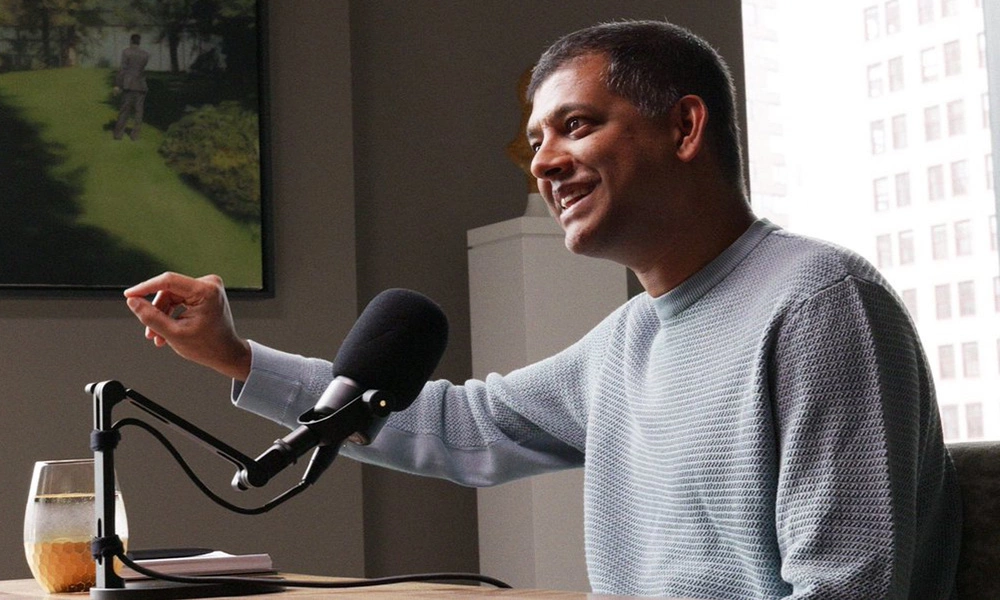
In investor Patrick O’Shaughnessy’s Invest Like the Best podcast, broadcast on May 13th, Rao shared at Anthropic that AI is increasingly performing intelligent tasks, from software engineering to financial reporting. Meanwhile, humans are shifting to supervisory, evaluative, and strategic roles.
“We’ve hired a lot more people because of that,” Rao said, adding that Claude acts like a “catalyst” for increased productivity. “Even as the team expands, they work more efficiently when they understand how to use Claude within the company. I think this is true for many other companies as well.”
According to Rao, over 90% of Anthropic’s code is written using Claude Code, the company’s own AI programming tool. The finance department is also undergoing a similar transformation, using Claude for reporting. The company’s monthly financial review process is even 90-95% complete before human review and interpretation of the results. Internal reports that previously took hours to complete now only take 30 minutes.
The improved productivity allows Anthropic employees to spend less effort gathering information while having more time to make decisions about that information, increasing overall efficiency. “People often say density is more important than quantity of talent, and I think that’s true in this case. We want to have the highest possible density of AI research and inference engineer talent. Add to that the support from the best models, and we think that’s a great combination,” said Rao.

Krishna Rao, Chief Financial Officer of Anthropic. Photo: X/Patrick O’Shaughnessy
Anthropic’s findings on AI adoption come as companies across various sectors strive to integrate this technology into the workplace. Some businesses are encouraging employees to use AI, while others are cutting jobs in the face of increased automation.
On May 12, Reuters reported that Meta employees distributed flyers at several US offices, expressing dissatisfaction with computer surveillance and layoffs as part of its AI strategy. Prior to this, Meta announced a 10% reduction in its workforce, equivalent to 8,000 employees, on May 20. This is considered the first large-scale layoff, paving the way for a plan to cut staff throughout 2026 to restructure its AI operations. Further layoffs are expected in the second half of the year.
Economists and tech leaders have differing opinions on whether AI will eventually replace office workers or improve productivity. Some warn that automation could lead to unemployment faster than it creates new jobs, while others believe that increased productivity could ultimately boost demand for personnel.
Last month, Amos Bar-Joseph, CEO of the startup Swan AI, posted a screenshot on LinkedIn of an invoice from Anthropic totaling $113,421.87. Notably, this was the cost of AI for four employees, or approximately $28,000 per person per month, exceeding the salaries of many people. Bar-Joseph stated that Swan AI has always invested heavily in artificial intelligence, but not to oppose humans. He said, “We will hire when we reach the limits of what AI can do. We haven’t reached that limit yet, in fact, we’re still very far from it,” he told Business Insider.
Compiled by Thu Thao
 EN
EN  VI
VI
Leave a Reply
You must be logged in to post a comment.